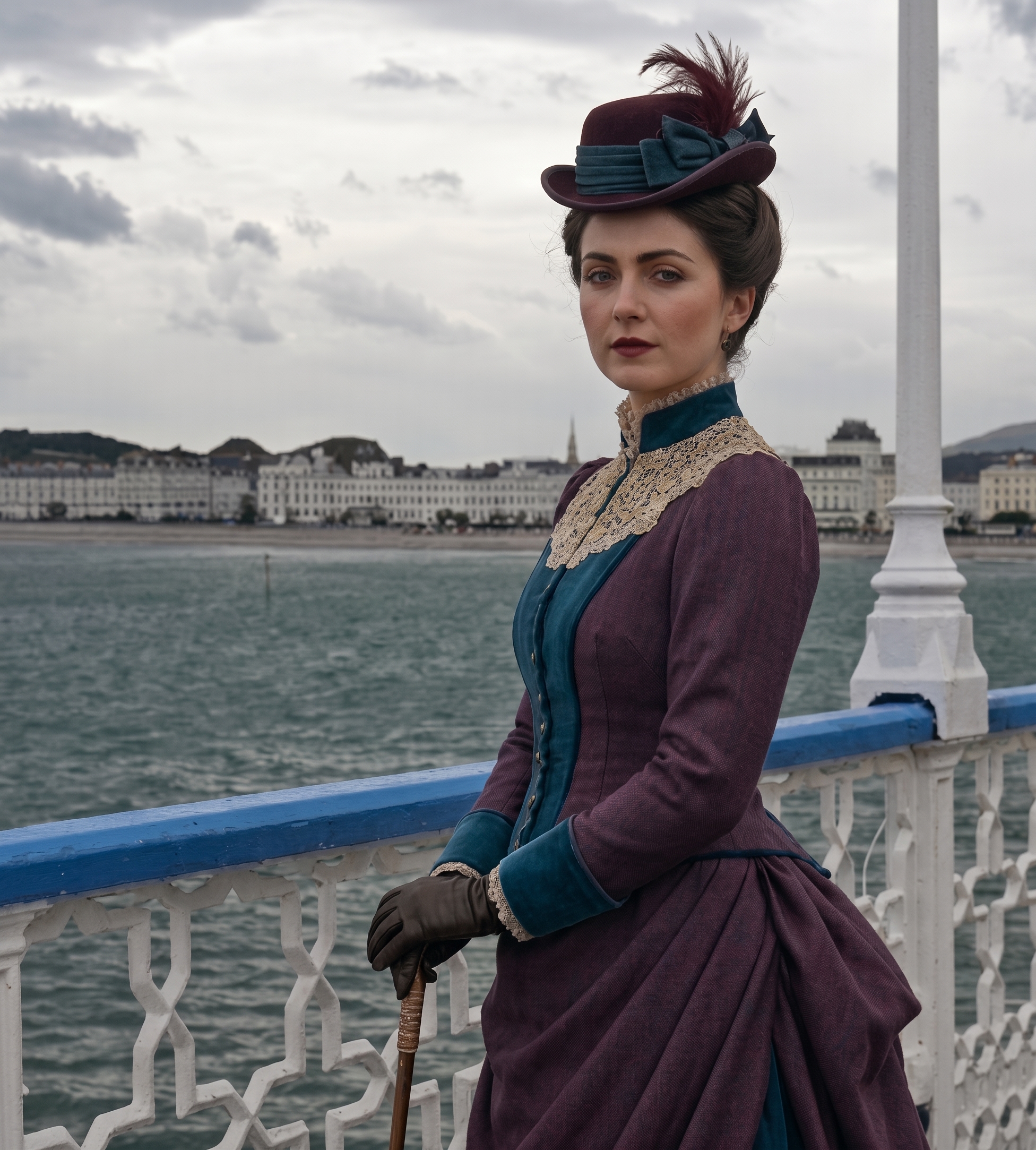
About Miss Mostyn
Miss Mostyn is a figure of some standing in Llandudno, though standing of a particular kind: the kind that does not require explanation and is not improved by receiving one.
She is connected, through lineage, property, advantageous marriage and at least one celebrated misunderstanding involving a codicil, to the Mostyn family whose land shaped the modern town. The Mostyn estate was responsible for the planned development of Llandudno in the 1840s and 1850s: the broad streets, the controlled building lines, the formal promenade and the general composure that still defines central Llandudno were outcomes of estate direction. She does not labour this point. The Orme, Mostyn Street, Mostyn Gallery, Mostyn Hotel, the estate influence in the architecture: she simply notes that these things exist and allows visitors to draw their own conclusions.
In public life, Miss Mostyn is known principally as a woman of standards. She supports Temperance, Improvement and the proper maintenance of architectural heritage. She has addressed civic gatherings on all three subjects with eloquence and, on the best occasions, with genuine sincerity. She believes in clean living, honest dealing and the importance of not calling a seaside hotel ‘charming’ when the correct word is ‘adequate’.
She is a patron of Venue Cymru and has attended more civic events, memorial teas and hotel openings than she cares to put a number to, particularly now that some of the hotels require the number to be revised downward. She is also acquainted with Bodysgallen Hall in its various incarnations and has strong opinions about the management of the Great Orme goat herd, which she has kept largely to herself.
Those who have encountered her at public functions report that she is tall, composed, impeccably dressed and pleasingly difficult to place in time. She expresses opinions without raising her voice. She notices everything. She does not offer unsolicited advice, because she does not consider her advice unsolicited.
Her relationship with Llandudno is proprietorial in the oldest sense: not of a person who owns a place, but of a person who considers themselves responsible for its reputation and is not prepared to let standards slip quietly into the Irish Sea while everyone is looking at the view.
She does not grant interviews. She has occasionally been the subject of them, which is a different arrangement and one she finds far more satisfactory.
This guide (101 pages covering the Great Orme, the pier, the beaches, the tramway, the mines, the accommodation, the food, the day trips, the walking and the honest assessment of what Llandudno is and is not) is published under her name, in her voice, and with her conviction that Llandudno deserves to be described as it is rather than as the tourist board would prefer it to appear.
She considers this a form of loyalty. Not everyone agrees. She has not altered her position.
Correspondence may be directed to the contact page. Invitations to civic receptions and private dinners should be sent by post, on headed paper, and should not attempt familiarity before it has been established.